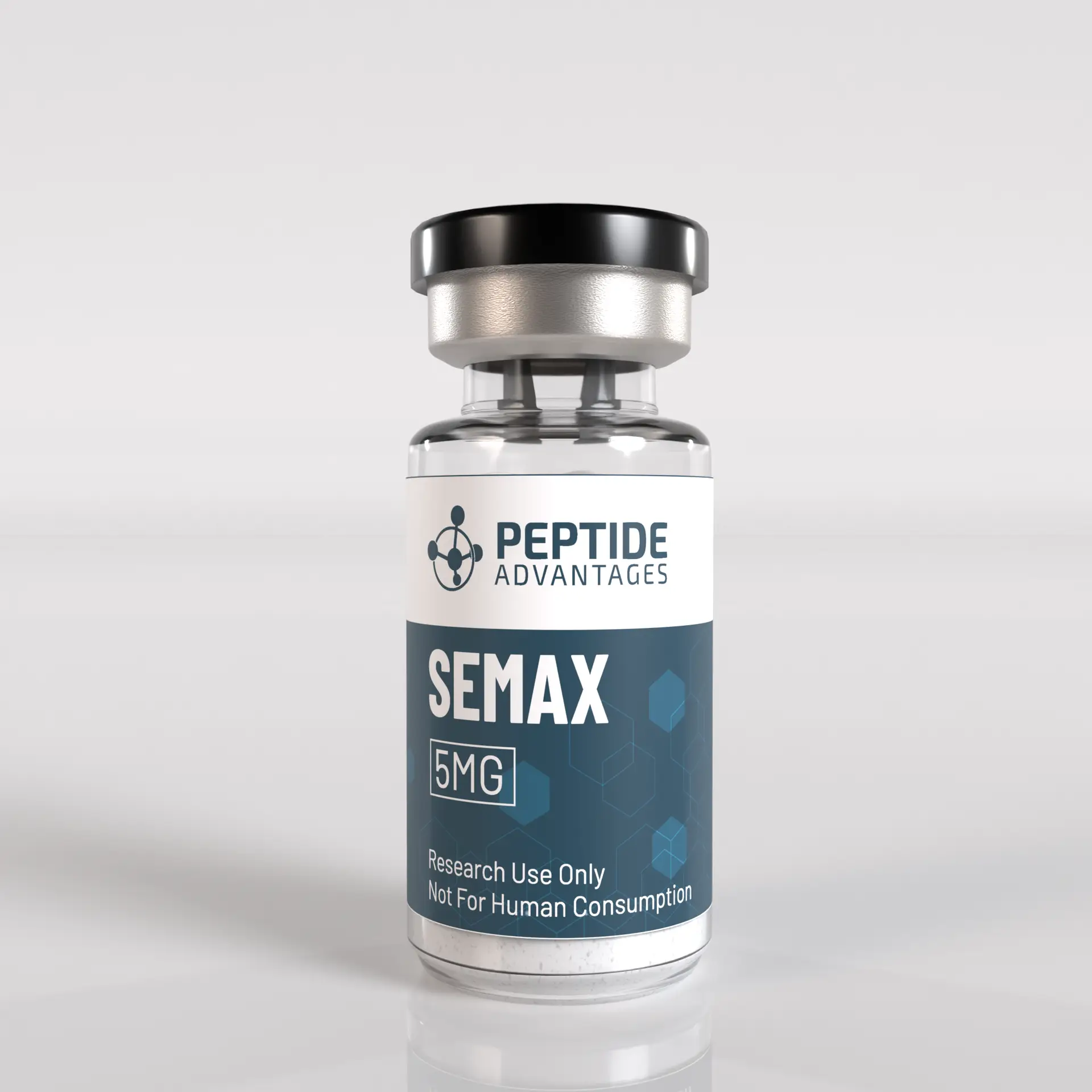
Semax is a synthetic heptapeptide consisting of the ACTH(4-7) fragment (Met-Glu-His-Phe) extended at the C-terminus with a Pro-Gly-Pro (PGP) tripeptide tail, which increases its resistance to enzymatic degradation relative to the unmodified ACTH fragment. It is a frequent subject of laboratory research and is supplied as a lyophilized powder for research use only.
In published in vitro and preclinical research, Semax has been studied in connection with the regulation of gene expression for brain-derived neurotrophic factor (BDNF) and nerve growth factor (NGF), and with melanocortin-related signaling. These studies are conducted in cell-culture and animal research models. The findings derive from laboratory research and do not describe or imply any effect, benefit, or use in humans or animals.
Published literature has examined Semax across a range of cell-culture and animal research models relating to neurotrophic-factor gene expression and ACTH-fragment peptide biology. These reports reflect controlled laboratory conditions only and do not translate to dosing, treatment, or applications in any other context. Its mechanism is studied alongside related research compounds such as Selank, Dihexa, and P21.
For further reading, see published research on Semax on PubMed.
Product Specifications
CAS Number80714-61-0
Storage Conditions Store at −20°C; protect from light and moisture
For Research Use Only.
e.
Storage
Storage Instructions:
Store the lyophilized reference standard at minus 20 degrees Celsius, protected from light and moisture. Once placed in solution with a laboratory solvent, hold the solution at 2 to 8 degrees Celsius and use it within 30 days. Solvent selection and handling are the responsibility of the receiving laboratory
Related products