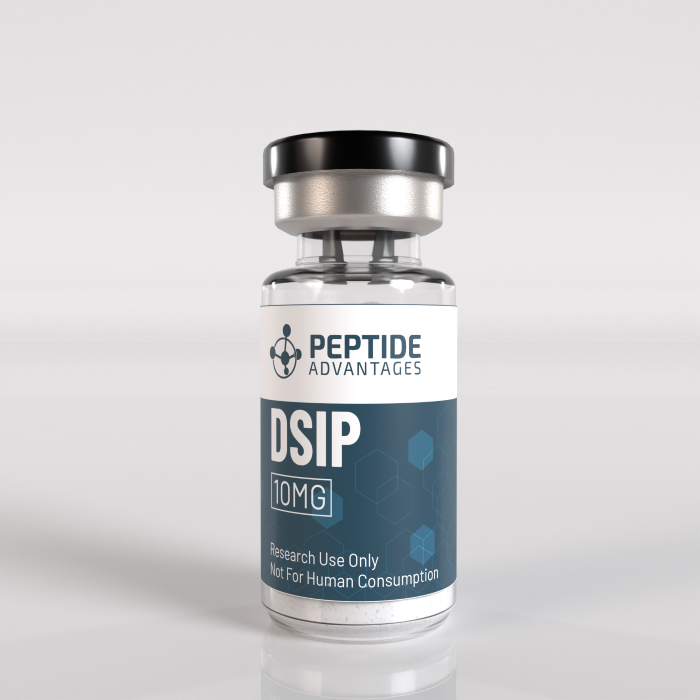
DSIP 10mg
DSIP (Delta Sleep-Inducing Peptide) is a synthetic nonapeptide consisting of nine amino acids, originally isolated from rabbit cerebral blood by Schoenenberger and Monnier in 1977. With the sequence Trp-Ala-Gly-Gly-Asp-Ala-Ser-Gly-Glu, DSIP has been the subject of cellular and biochemical research literature for over four decades, with research contexts examining peptide-receptor interactions, cellular signaling, and neuropeptide biology.
For further reading, see published research on DSIP on PubMed.
Product Specifications
- Compound: DSIP (Delta Sleep-Inducing Peptide)
- Class: Synthetic nonapeptide
- Sequence: Trp-Ala-Gly-Gly-Asp-Ala-Ser-Gly-Glu
- Molecular Weight: ~849 Da
- Form: Lyophilized powder
- Vial Size: 10mg in 3mL glass vial Research Background
Research Background
DSIP has been investigated in research literature across several scientific contexts:
- Cellular neurobiology research — investigations into peptide effects on cellular signaling pathways in neuronal cell models
- Neuropeptide chemistry research — studies examining DSIP’s structural properties and stability across various analytical conditions
- Delta-wave cellular research — historical research on DSIP’s relationship to delta-wave electrophysiology in cellular and animal models
- Comparative peptide research — analytical studies positioning DSIP alongside other short-chain regulatory peptides in cellular research contexts
- Cellular oxidative stress research — studies examining cellular response in neuronal models under oxidative conditions
- Peptide-receptor binding research — investigations into DSIP’s cellular targets and signaling mechanisms
DSIP is historically significant in peptide research as one of the earliest characterized “sleep-related” peptides, originally identified in 1977 by Schoenenberger and Monnier through isolation from rabbit cerebral venous blood during electrically induced sleep states. Despite its name, DSIP’s exact cellular receptor and signaling mechanism remain areas of active research investigation. Foundational research is available through PubMed (pubmed.ncbi.nlm.nih.gov) and the National Institutes of Health’s PMC database (pmc.ncbi.nlm.nih.gov), where researchers can access peer-reviewed studies on DSIP cellular biology and neuropeptide research.
Terms of Sale
This product is supplied for in vitro laboratory research only and has not been evaluated by the U.S. Food and Drug Administration. By purchasing, the buyer confirms they are 21 or older, a qualified research professional or institution, and will not use this material for human consumption, veterinary use, or any in vivo application. Update advantages assumes no liability for misuse or off-label application.
Storage
Storage Instructions:
Store the lyophilized reference standard at minus 20 degrees Celsius, protected from light and moisture. Once placed in solution with a laboratory solvent, hold the solution at 2 to 8 degrees Celsius and use it within 30 days. Solvent selection and handling are the responsibility of the receiving laboratory.
Related products