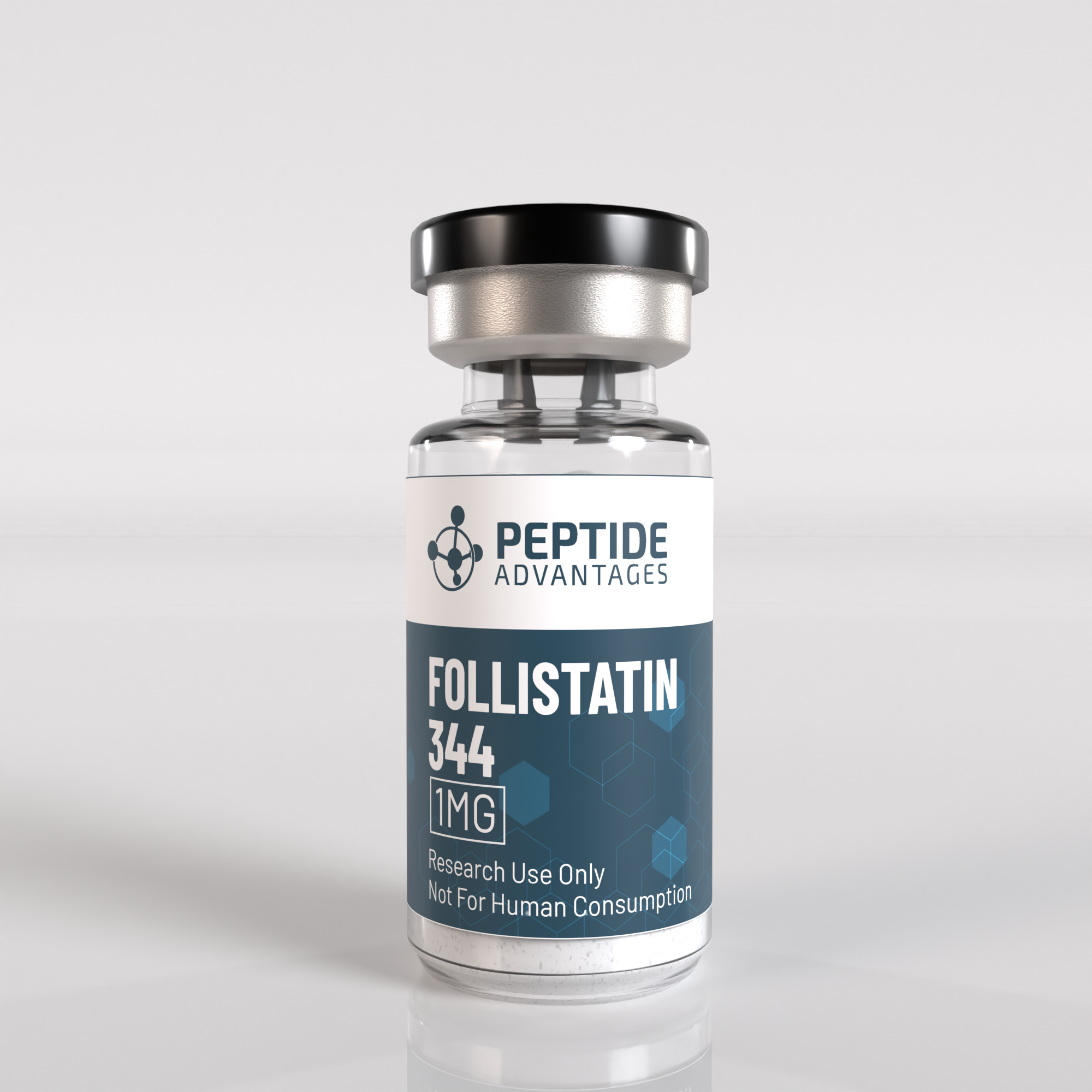

Follistatin 344
$ 125
What is Follistatin 344 (95%) (1mg)?
Follistatin 344 (95%) (1 mg) is a synthetic research protein/peptide reagent commonly used in muscle biology and performance-related research. It corresponds to a 344–amino-acid human follistatin isoform and helps researchers study how certain growth factors in the TGF-β family behave outside the cell.
Follistatin 344 binds to signaling proteins such as activin A and myostatin, which reduces how much of these ligands can reach their receptors. Researchers use this “ligand-binding” effect to observe changes in cell signaling, gene expression, and downstream biology—especially pathways linked to SMAD2/3 signaling.
Because it can dampen activin/myostatin activity, Follistatin 344 (95%) appears in studies of skeletal muscle differentiation, tissue remodeling, fibrosis, oncology models, liver biology, and developmental pathways. It is used strictly as a mechanistic research tool, not as a therapy or supplement.
Product Specifications
- Synonyms: Follistatin (FST); Activin-Binding Protein
- Molecular Weight: 3780 g/mol
- Packaging Format: 1 mg Follistatin 344 per vial, supplied as a lyophilized (freeze‑dried) powder in a sealed research‑grade container
- Storage Conditions: Store at −20°C or below, protected from light and moisture; avoid repeated freeze–thaw cycles
- Intended Use: For Laboratory Research Use Only (not for human or veterinary use)
Research Applications & Usage Information
Follistatin 344 (95%) (1mg) is commonly included in laboratory studies focused on:
- Myostatin/Activin Signaling and Muscle Biology: Neutralize ligands in muscle cell and animal models to examine differentiation, hypertrophy-related endpoints, and pathway-specific effects.
- TGF‑β/SMAD Pathway Mapping: Measuring how reduced activin availability changes SMAD2/3 activation, transcriptional outputs, and signaling cross-talk within the broader TGF-β superfamily.
- Tissue Regeneration and Remodeling Models: Studying in extracellular-matrix markers, inflammatory signals, and remodeling responses in muscle, liver, and other tissues.
- Oncology and Tumor‑Biology Research: Explored how shifts in activin–follistatin balance relate to tumor-cell behaviors such as proliferation, invasion, and survival in defined models.
- Developmental and Embryology Studies: Modeled ligand antagonism in embryology systems where activin/BMP signaling influences early development and organ formation.
- Endocrine and Metabolic Pathway Investigations: Investigated how changes in activin-linked signaling relate to endocrine readouts in preclinical systems (mechanistic work only).
In all cases, the outcomes observed are specific to the experimental systems used and should not be extrapolated to clinical practice. The peptide is a research‑only reagent intended for in‑vitro, ex‑vivo, and animal‑model studies under controlled conditions.
Storage
Storage Instructions:
Store the lyophilized reference standard at minus 20 degrees Celsius, protected from light and moisture. Once placed in solution with a laboratory solvent, hold the solution at 2 to 8 degrees Celsius and use it within 30 days. Solvent selection and handling are the responsibility of the receiving laboratory..