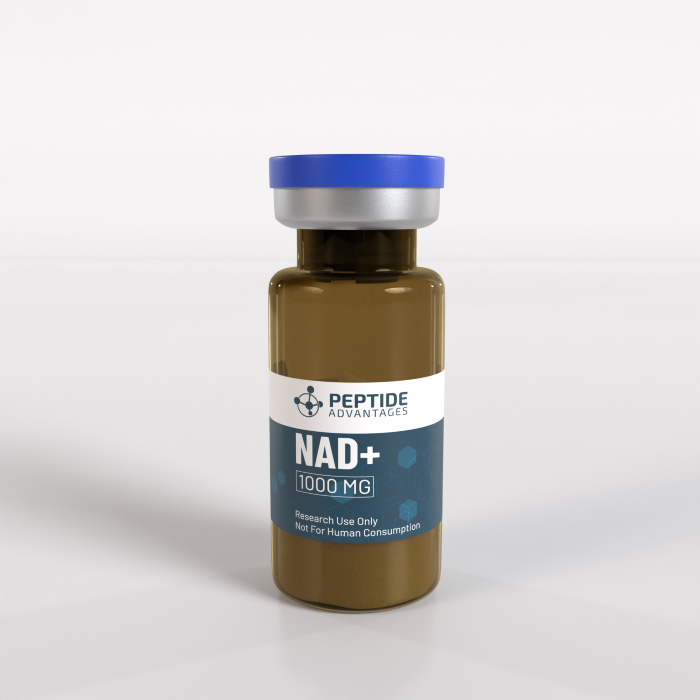

NAD+ (Nicotinamide Adenine Dinucleotide)
Price range: $ 125 through $ 225
What Is NAD+
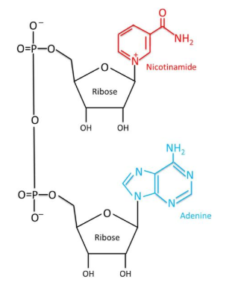
NAD+ (Nicotinamide Adenine Dinucleotide) is a naturally occurring coenzyme found in every living cell, playing a central role in cellular metabolism, mitochondrial function research, and cellular signaling pathways. NAD+ has been the subject of extensive cellular and biochemical research literature, particularly in the fields of mitochondrial biology, sirtuin enzymology, and cellular aging research.
Sequence: N/A
Molecular Formula: C21H27N7014P2
Molecular Weight: 663.43 g/mol
PubChem CID:925
CAS Number: 53-84-9
Synonyms: nicotinamide adenine dinucleotide, beta-NAD, NAD, Endopride
Research Background
NAD+ is a fundamental coenzyme involved in cellular electron transfer reactions and serves as a substrate for numerous enzymatic processes. NAD+ has been investigated in research literature across several scientific contexts:
- Mitochondrial biology research — investigations into NAD+ involvement in oxidative phosphorylation, electron transport chain function, and cellular energy production pathways
- Sirtuin enzymology — extensive research on NAD+-dependent sirtuin proteins (SIRT1-SIRT7) and their roles in cellular regulatory pathways
- PARP enzymology research — studies examining poly(ADP-ribose) polymerase enzymes and their NAD+-consuming reactions in cellular biology
- CD38 and NAD+ metabolism research — investigations into NAD+ degradation pathways and cellular NAD+ homeostasis
- Cellular aging research — research literature examining NAD+ levels across cellular aging models and tissue contexts
- Cellular redox biology — research on NAD+/NADH ratio dynamics in cellular metabolic states
NAD+ research has expanded substantially over the past two decades, with peer-reviewed literature published across high-impact journals including Cell, Nature, and Science. Foundational research is available through PubMed (pubmed.ncbi.nlm.nih.gov) and the National Institutes of Health’s PMC database (pmc.ncbi.nlm.nih.gov), where researchers can access peer-reviewed studies on NAD+ cellular biology, including work by leading research groups including Sinclair et al., Imai et al., and Verdin et al. on cellular NAD+ biology
Storage
Store the lyophilized reference standard at minus 20 degrees Celsius, protected from light and moisture. Once placed in solution with a laboratory solvent, hold the solution at 2 to 8 degrees Celsius and use it within 30 days. Solvent selection and handling are the responsibility of the receiving laboratory.
Related products