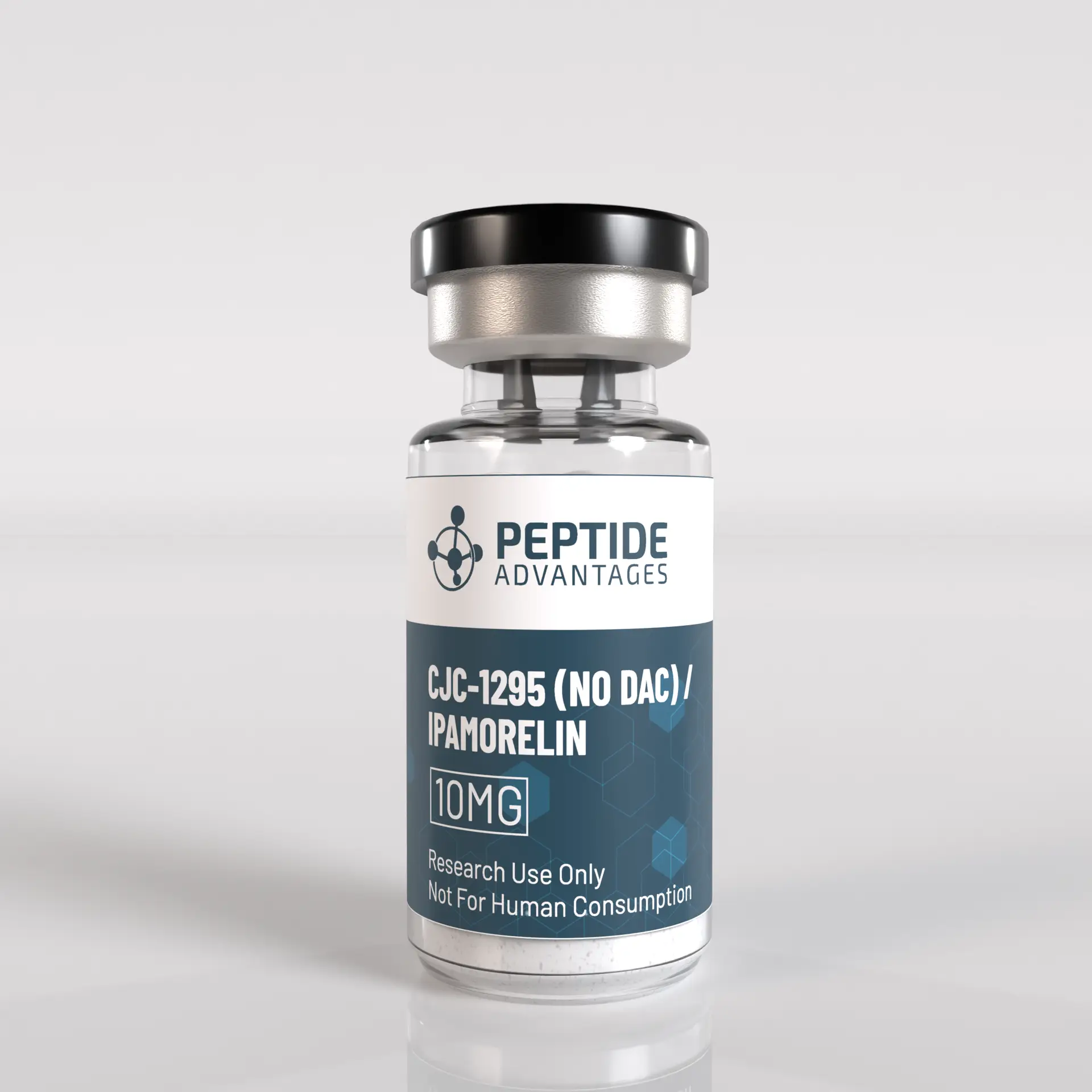
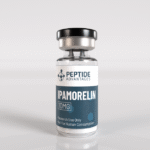

CJC-1295 (No DAC), Ipamorelin 10mg (Blend)
$ 110
CJC-1295
CJC-1295 also causes the release of GH, but it does so by stimulating the growth hormone releasing hormone receptor. It is also highly selective and has demonstrated positive benefits on bone health, lean body mass, insulin resistance, and muscle growth and development[7]–[9]. By combing the two peptides, it may be possible to produce enhanced effects because they stimulate the growth hormone axis via two different mechanisms. Research in animal models using both peptides is likely to show increased benefit without substantially increased side effects.
Ipamorelin is likely to raise baseline levels of GH such that CJC-1295 will be able to produce both higher peaks and higher troughs while preserving normal growth hormone pulsatile secretion. The net effect of combing the peptides would be a higher set point for the normal ebb and flow of GH, resulting in improved lean body mass, better muscle development, improved use of insulin, and overall better metabolic function.
About The Author
The above literature was researched, edited and organized by Dr. E. Logan, M.D. Dr. E. Logan holds a doctorate degree from Case Western Reserve University School of Medicine and a B.S. in molecular biology.
Scientific Journal Author
Dr. Dominique Bridon holds a Master of Science, Chemical Engineering and Polymer Sciences from Ecole Nationale Supérieure de Chimie and a PhD in Organic Chemistry from the University of Paris XI, ICSN, Orsay, France with Nobel Laureate Sir Derek H. R. Barton as Research Advisor. He completed his Post-Doctoral Research at the University of California, Berkeley. He studied the potential of CJC-1295 as a long lasting GRF analog and also held various leadership positions involving peptide research and technologies at Ipsen, Conjuchem, Redcell, and Abbott Laboratories. Dr. Bridon has served as a Director for Enobia (acquired by Alexion) and Neuronax and as a member of the Scientific Advisory Board of Syntaxin (acquired by Ipsen) and Biosortia. He now brings 30 years of executive and scientific leadership experience to the Epivax Oncology team.
Dr. Dominique Bridon is being referenced as one of the leading scientists involved in the research and development of CJC-1295. In no way is this doctor/scientist endorsing or advocating the purchase, sale, or use of this product for any reason. There is no affiliation or relationship, implied or otherwise, between Peptide Sciences and this doctor. The purpose of citing the doctor is to acknowledge, recognize, and credit the exhaustive research and development efforts conducted by the scientists studying this peptide. Dr. Dominique Bridon is listed in [10] under the referenced citations.
COA / HPLC / MS
COA / HPLC / MS
3RD PARTY TESTING
3RD PARTY TESTING
Storage
Storage Instructions:
All of our products are manufactured using the Lyophilization (Freeze Drying) process, which ensures that our products remain 100% stable for shipping for up to 3-4 months.
Once the peptides are reconstituted (mixed with bacteriostatic water), they must be stored in the fridge to maintain stability. After reconstitution, the peptides will remain stable for up to 30 days.
Lyophilization is a unique dehydration process, also known as cryodesiccation, where the peptides are frozen and then subjected to low pressure. This causes the water in the peptide vial to sublimate directly from solid to gas, leaving behind a stable, crystalline white structure known as lyophilized peptide. The puffy white powder can be stored at room temperature until you’re ready to reconstitute it with bacteriostatic water.
Once peptides have been received, it is imperative that they are kept cold and away from light. If the peptides will be used immediately, or in the next several days, weeks or months, short-term refrigeration under 4C (39F) is generally acceptable. Lyophilized peptides are usually stable at room temperatures for several weeks or more, so if they will be utilized within weeks or months such storage is typically adequate.
However, for longer term storage (several months to years) it is more preferable to store peptides in a freezer at -80C (-112F). When storing peptides for months or even years, freezing is optimal in order to preserve the peptide’s stability.