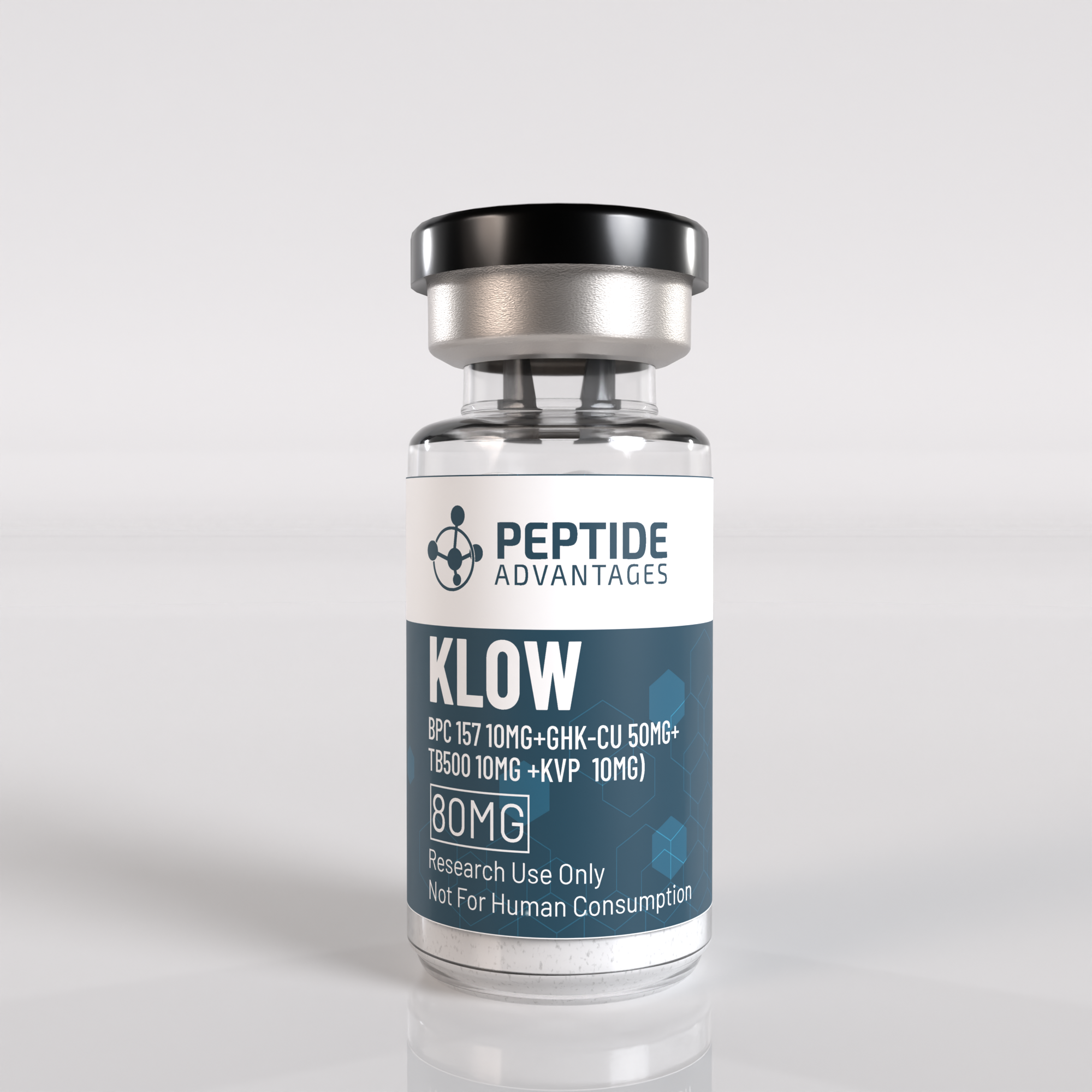
Klow Blend
$ 165
BPC-157 and TB-500 (Thymosin Beta-4) are peptides studied for their potential to promote tissue repair. BPC-157 supports healing by improving blood flow and regulating growth factors, while TB-500 aids cell migration and tissue regeneration. Together, they may accelerate recovery and improve tissue integrity, particularly in injuries or chronic conditions. Most research so far is preclinical.
BPC-157 10mg, TB-500 (Thymosin Beta-4) 10mg, KPV 10mg, GHK-Cu 50mg
(80mg Total Klow Blend)
The BPC157, TB500 (43 amino acid Thymosin Beta-4), KPV, and GHK-Cu quad blend combines four well-studied peptides that work through different but complementary pathways. BPC157 has been researched for supporting faster tissue healing, new blood vessel growth, and protection of the stomach and gut lining. TB500, the full 43aa Thymosin Beta-4 peptide, helps regulate actin, a key protein for cell movement and repair, and plays an important role in wound healing and tissue regeneration. KPV, a short fragment of alpha-MSH, is known for its anti-inflammatory and antimicrobial effects, mainly by reducing overactive immune signaling. GHK-Cu is a natural copper-binding peptide that stimulates collagen production, skin and hair regeneration, and cellular repair. Together, these four peptides may act synergistically—BPC157 and Thymosin Beta-4 strengthen repair and blood flow, KPV calms inflammation, and GHK-Cu drives tissue remodeling and renewal—making this blend a broad research platform for studying healing and regeneration.
COA / HPLC / MS
COA / HPLC / MS
3RD PARTY TESTING
3RD PARTY TESTING
Storage
Storage Instructions:
All of our products are manufactured using the Lyophilization (Freeze Drying) process, which ensures that our products remain 100% stable for shipping for up to 3-4 months.
Once the peptides are reconstituted (mixed with bacteriostatic water), they must be stored in the fridge to maintain stability. After reconstitution, the peptides will remain stable for up to 30 days.
Lyophilization is a unique dehydration process, also known as cryodesiccation, where the peptides are frozen and then subjected to low pressure. This causes the water in the peptide vial to sublimate directly from solid to gas, leaving behind a stable, crystalline white structure known as lyophilized peptide. The puffy white powder can be stored at room temperature until you’re ready to reconstitute it with bacteriostatic water.
Once peptides have been received, it is imperative that they are kept cold and away from light. If the peptides will be used immediately, or in the next several days, weeks or months, short-term refrigeration under 4C (39F) is generally acceptable. Lyophilized peptides are usually stable at room temperatures for several weeks or more, so if they will be utilized within weeks or months such storage is typically adequate.
However, for longer term storage (several months to years) it is more preferable to store peptides in a freezer at -80C (-112F). When storing peptides for months or even years, freezing is optimal in order to preserve the peptide’s stability.
Related products

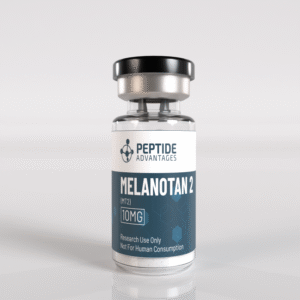
Melanotan 2 (MT2) 10mg
$ 50
PA-1SM
Price range: $ 99 through $ 215
PA-3R
Price range: $ 225 through $ 375
PT-141 (Bremelanotide)
$ 55